
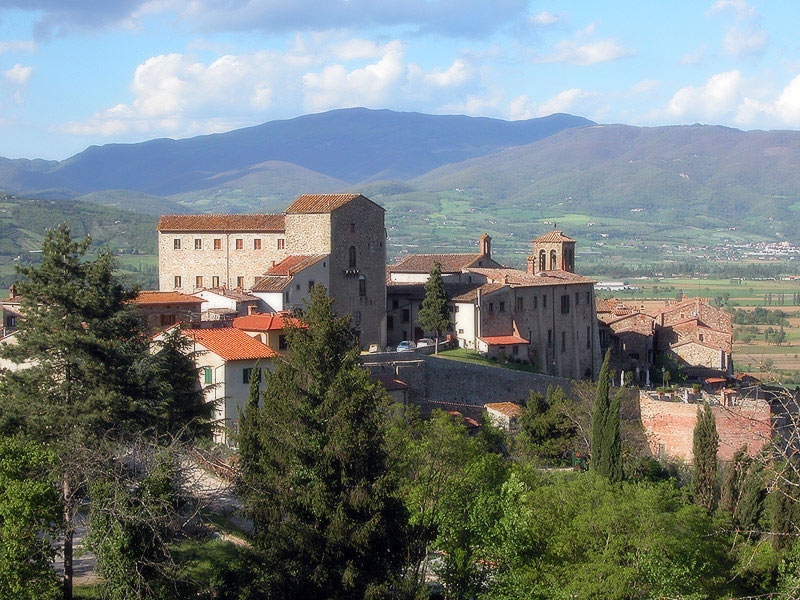
Anghiari, a medieval village in Tuscany Tiber Valley
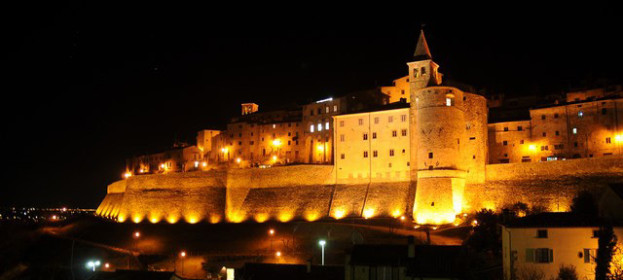
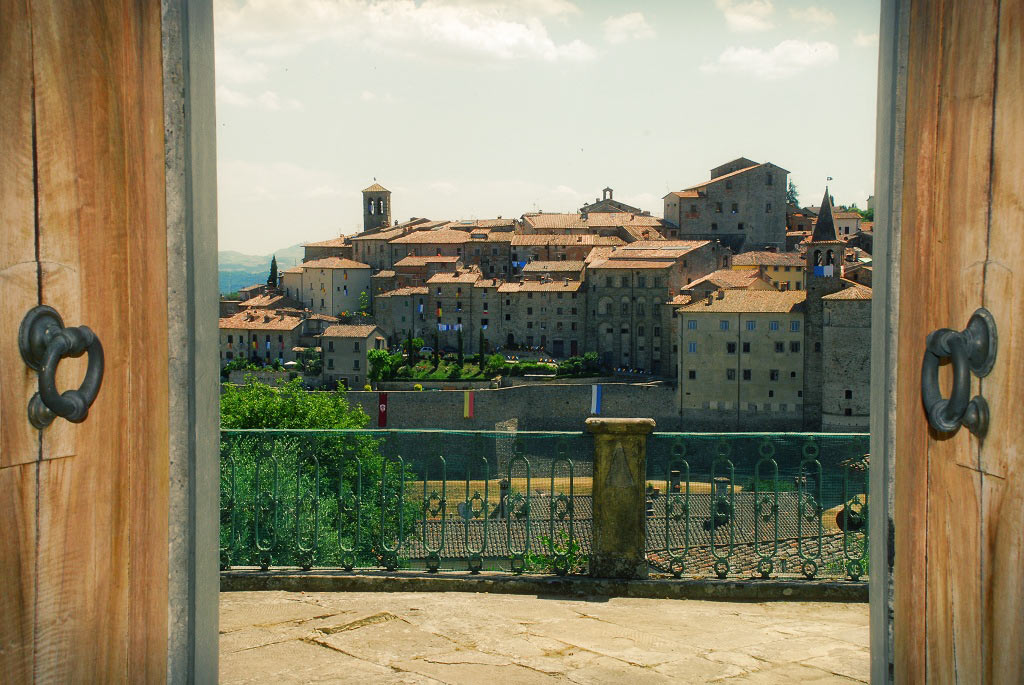
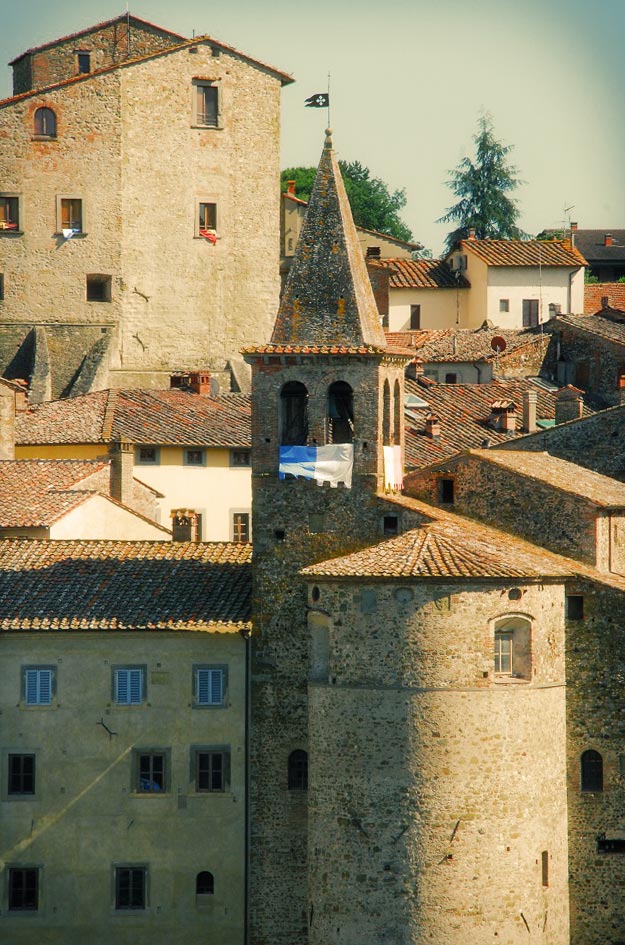
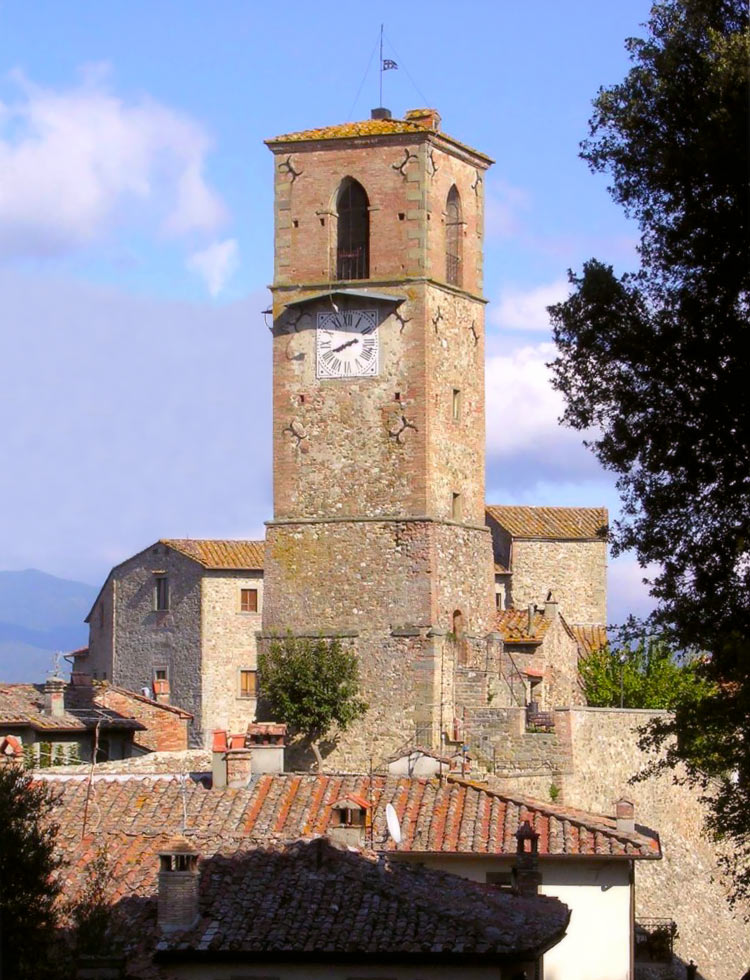
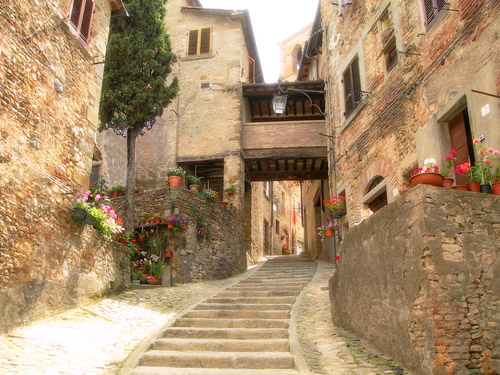
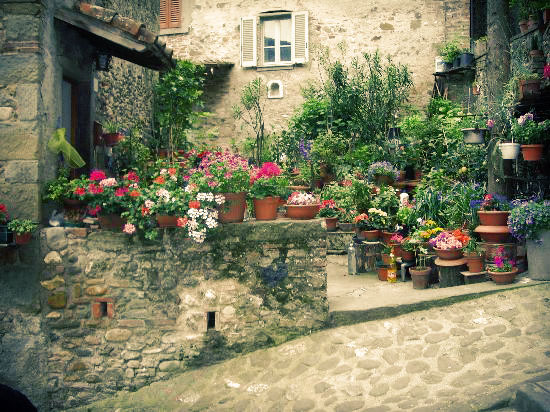
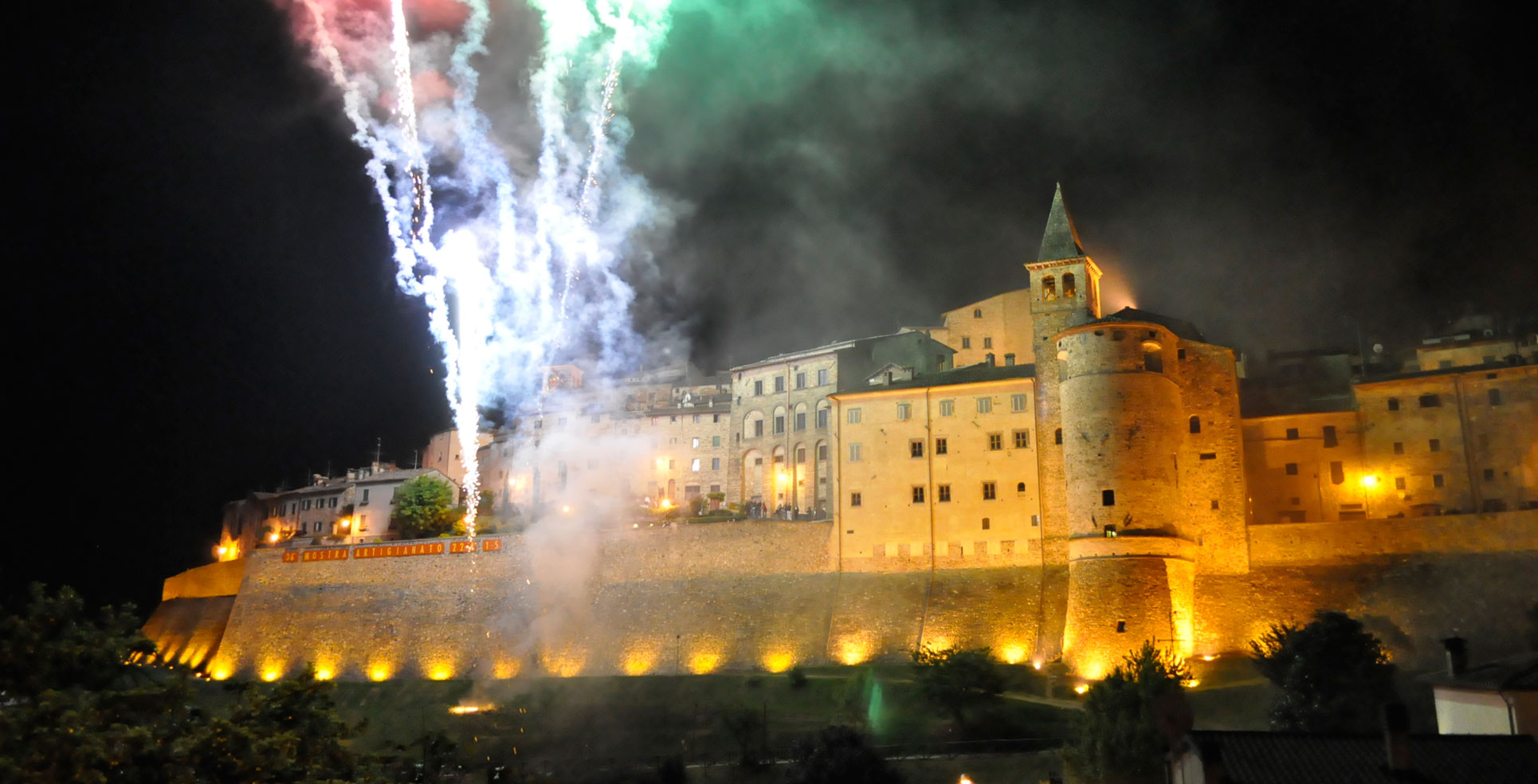
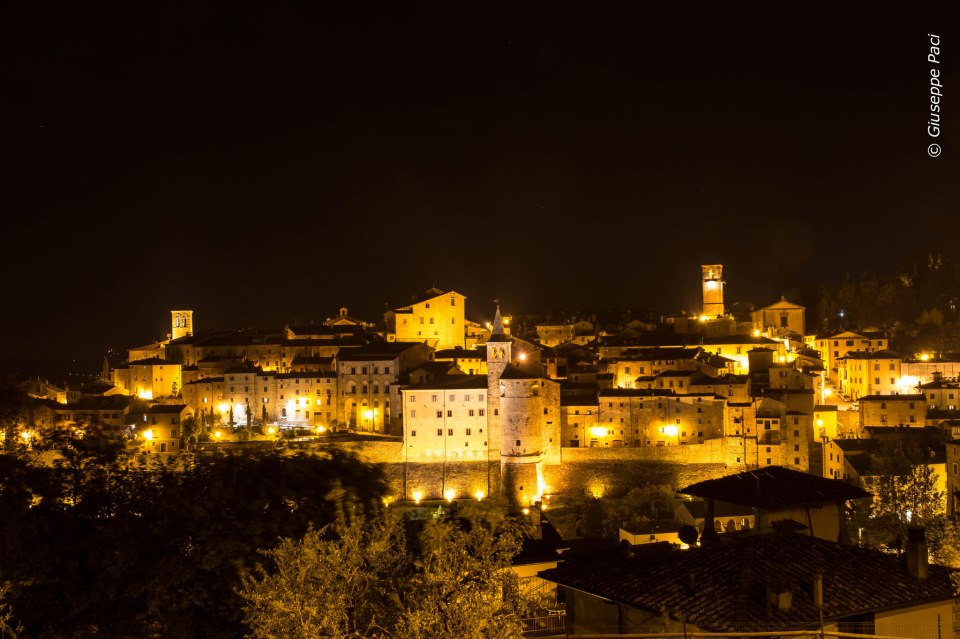
Anghiari, medieval village in Tuscany Tiber Valley, is a member of ” The Most Beautiful Villages of Italy” club, an official list of small towns that earn this title not only for the obvious aesthetic features, but also for their particular historic and artistic interest, perfectly preserved in their urban structure, with an excellent way of life. Anghiari has also earned the “Orange Flag “a quality brand for eco-tourism of the Italian Touring Club, aimed at small inland villages which distinguish themselves for the excellent offer and the welcoming atmosphere”.
Anghiari is also part of “Slow Town” network: small towns (we translate from the official website) “animated by people curious of Time Regained, where the man is still the protagonist of the slow, healthy succession of the seasons”; municipalities “respectful of citizens’ health and genuine products as well as good food, rich in fascinating craft traditions, valuable masterpieces, squares, theaters, shops, cafes, restaurants, places of the spirit and unspoiled landscapes. Towns characterized for their spontaneous religious rites and for the respect of traditions, for the joy of a slow and quiet life.”
-
- Anghiari
-
- Anghiari 5 minuti
-
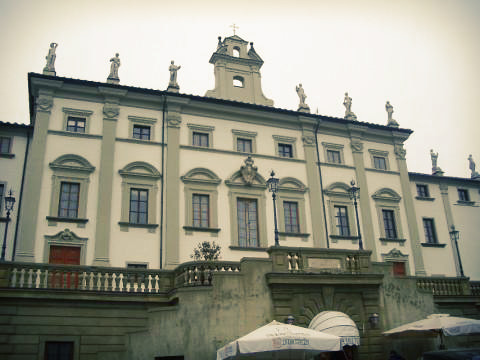
- Teatro Anghiari
-
- Piazza del popolo
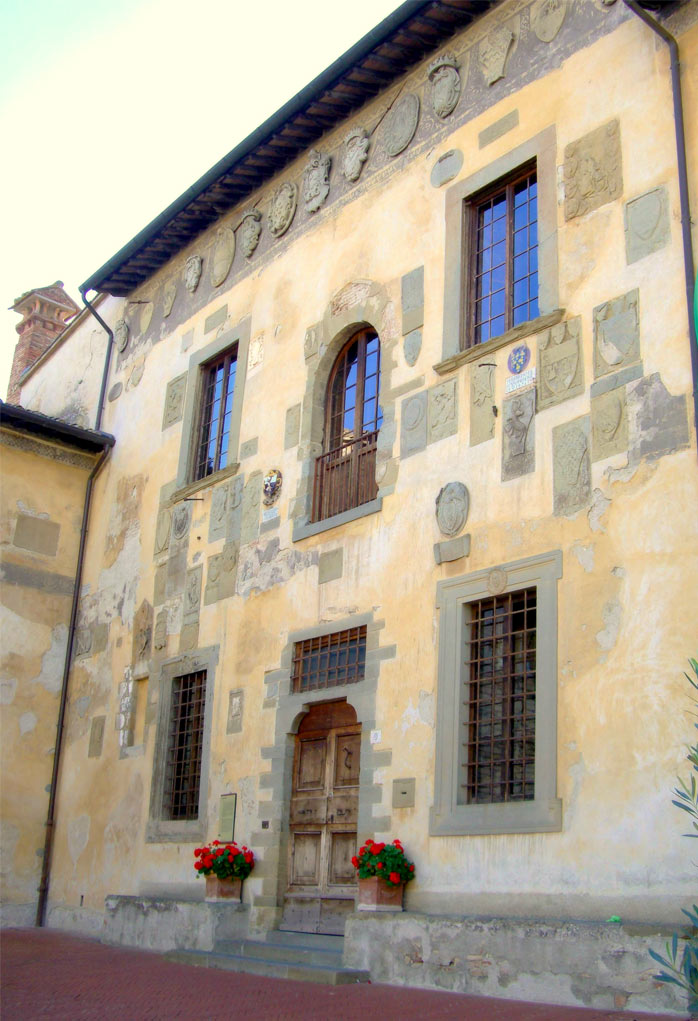
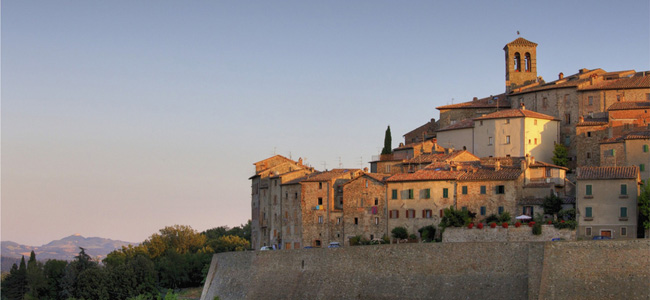
Although it was already inhabited in Roman times, the first certain information of Anghiari is written on a parchment dated 1084, preserved in the archives of Città di Castello, in which it is named “curte nostra de Anglare”.
So initially Anghiari was named “Curtis”, that is a fortified estate of the Lord and in 1104 it was tranferred to Camaldolesi monks (who built the abbey of St. Bartholomew the Apostle) by the last wills of feudal lord Bernardino di Sidonia. Bernardino di Sidonia had restored freedom to the slaves and donated part of the rights on the castle to the “uomini di masnada”, former servants entered the feudal hierarchy for military services rendered to the lord and with this new social order, Anghiari entered the “municipality” age. Its consuls were chosen between men of Masnada with the support of the St. Bartholomew abbey Prior.
As a result of military action of Arezzo’s Army, Anghiari castle is destroyed in 1175. The reconstruction started in 1181. The reconstruction of the second wall, completed in 1204, belongs to this stage.
In 1224 St. Francis, returning from Mount La Verna where he had received the stigmata, was hosted by the Lords of Montauto and gave his cassock to Prince Albert Barbolani. You can see the cassock in a chapel of the La Verna Sanctuary. The Holy Man went to the highest point of the village to meet the people, where there is a three streets crossroads and the legend says that he planted a cross in that place. From this visit, the popular demand to erect there a Franciscan monastery rise. The monastery grew over the centuries, until it became a real village, called “Borgo della Croce”. Alberto Barbolani promised to Francis to build another monastery in Montauto. Only much later the promise was kept by his heirs.
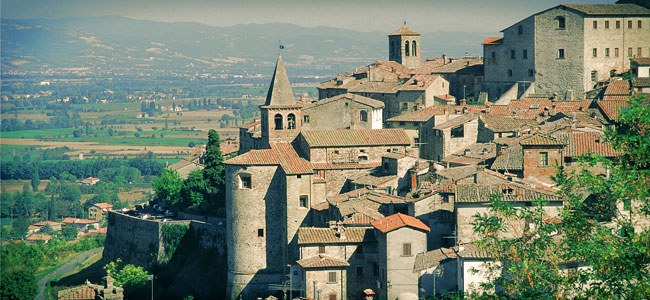
An important work of land reclamation took place during those years at the foot of the hill, promoting the intense agricultural activity of the Tiber Valley. In 1259 it was decided the diversion of the river Tiber to Sansepolcro with an agreement between Anghiari and Sansepolcro. With this exchange, Anghiari expanded its countryside toward the Biturgense town (Sansepolcro).
On January 4th, 1385, the Government of the Republic of Florence submitted Arezzo and its territories and a representative of Florence (Vicar) is sent to Anghiari. The most important historical event for which Anghiari is known is the famous battle of June 29th, 1440, which saw lined up on one part Florence, Venice and the Papacy, on the other a Milan army led by Niccolò Piccinino, who had expansionist aims in the central Italy.
The battle lasted one day and was won by the Florentines, who consolidated their domains in Tuscany.
This battle is also famous for having inspired the work of Leonardo Da Vinci lost in the Palazzo Vecchio in Florence and of which there are some studies of the Master, and some copies of the central part of the work, of which the most important was that of Rubens. National Geographic Society is conducting tests aimed to verify the hypothesis for which behind the fresco “The Battle of Marciano” by Vasari there is what remains of the work of Leonardo.
The period of the Medici Grand Duchy (1569-1737) saw a slow economic and cultural decline in Tuscany. Only in the eighteenth century the enlightened government of Leopold I of Lorraine overcame the crisis. To cite just a few examples, Leopold began the reclamation of Val di Chiana, founded the “Georgofili Academy”, rationalized agriculture and made Tuscany the first country in the world to abolish torture and the death penalty. In this period Anghiari further develop its agricultural economy and expands its borders beyond the Tiber.
-
- Anghiari

-
- ANGHIARI 5 MINUTI
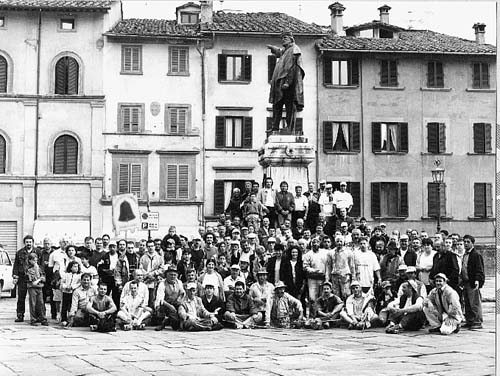
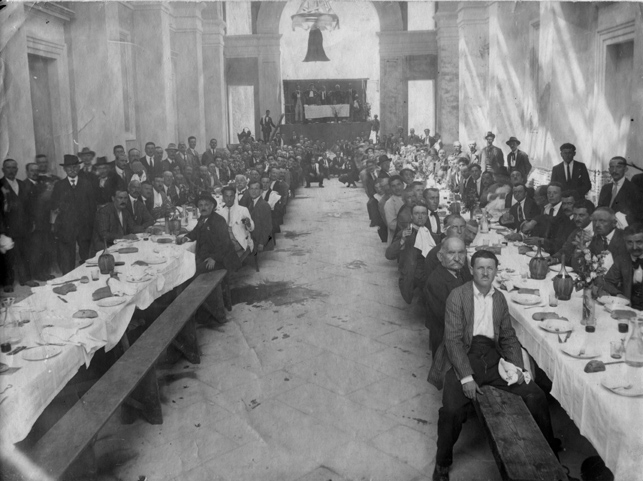

The grateful Arezzo citizens’ attachment to the Grand Duchy, will lead them to strenuously oppose the French advance in Napoleon’s army, but in 1800 and until 1814 these territories went under French rule. At this stage Anghiari is a bilingual city, whose documents are drawn up in Italian and French. Even today some slang expressions or names remind these linguistic influences (“alò” from “allons” or “Parterre”, name the citizens call the terrace overlooking the valley, built in the Napoleonic period).
After the end of Napoleonic age and in the Restoration, which saw the return in Tuscany of Grand Duchy of Lorraine, Anghiari actively participates in the Risorgimento (reunification of Italy): it has a large number of Garibaldi’s partisans (the names of which can still be read in the stele on the side of Votive Temple to the Fallen in Piazza IV Novembre) and it is known the existence of a vibrant circle of Mazzini’s followers.
Finally, on March 11 and 12, 1860, Anghiari vote for its accession to the Kingdom of Sardinia.
The economy of Anghiari today is based on agriculture, tourism and craftsmanship tradition: in particular, restoration of antique furniture, weaving (known all over the world are the Busatti’s tissues), basketwork and goldsmith.

